

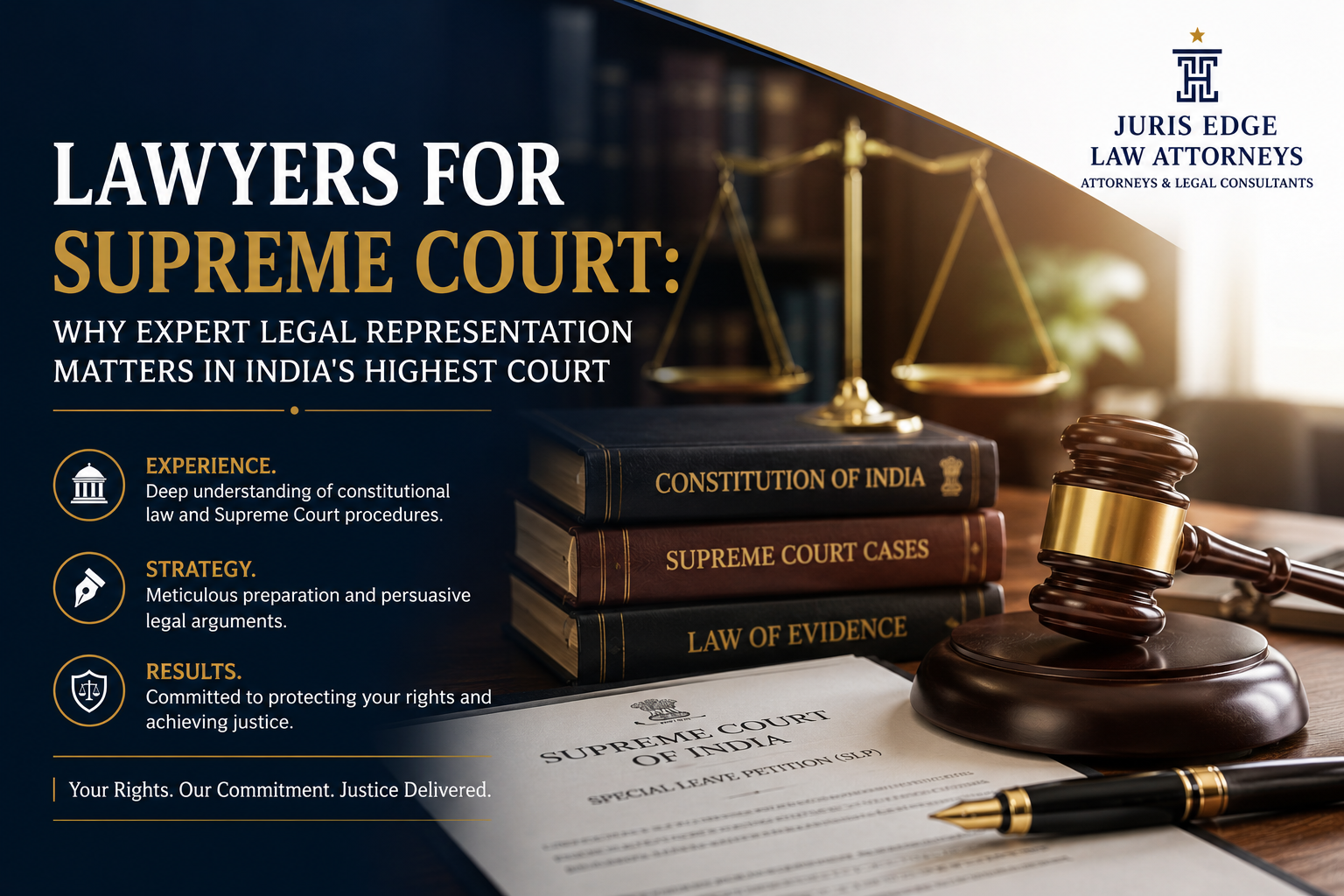
When a legal dispute reaches the highest level of the judicial system, choosing experienced lawyers for Supreme Court cases becomes one of the most important decisions a client can make. The Supreme Court of India serves as the apex judicial authority, hearing constitutional matters, civil disputes, criminal appeals, public interest litigations, and significant legal issues that impact individuals, businesses, and society as a whole.
Navigating Supreme Court proceedings requires specialized legal knowledge, strategic case preparation, and a thorough understanding of constitutional and procedural law. Whether you are appealing a High Court judgment or seeking relief in a complex legal matter, experienced Supreme Court lawyers can significantly influence the outcome of your case.
What Do Lawyers for Supreme Court Cases Do?
Lawyers for Supreme Court matters represent clients before the Supreme Court of India and provide legal assistance in cases involving:
- Civil Appeals
- Criminal Appeals
- Constitutional Law Matters
- Special Leave Petitions (SLPs)
- Public Interest Litigations (PILs)
- Corporate and Commercial Disputes
- Arbitration Appeals
- Fundamental Rights Cases
- Taxation and Regulatory Matters
Their role extends beyond courtroom representation. They conduct detailed legal research, prepare petitions, draft legal documents, formulate legal strategies, and present persuasive arguments before the bench.
Why Hiring Experienced Supreme Court Lawyers Is Essential
In-Depth Knowledge of Supreme Court Procedures
The Supreme Court follows unique procedural requirements that differ from lower courts. Experienced lawyers understand filing procedures, documentation requirements, court etiquette, and legal precedents necessary for effective representation.
Strong Legal Research and Advocacy Skills
Cases before the Supreme Court often involve complex legal questions and constitutional interpretations. Skilled lawyers conduct extensive research and build compelling arguments supported by judicial precedents and statutory provisions.
Strategic Case Assessment
Not every case qualifies for Supreme Court intervention. An experienced lawyer evaluates the legal merits of a case and advises clients on the best course of action, helping avoid unnecessary litigation costs and delays.
Effective Drafting of Special Leave Petitions
Many matters reach the Supreme Court through Special Leave Petitions under Article 136 of the Constitution of India. Drafting a strong SLP requires precision, legal expertise, and a clear presentation of substantial questions of law.
How to Choose the Right Lawyers for Supreme Court Cases
Selecting the right legal representative is critical for achieving favorable outcomes. Consider the following factors:
Experience in Supreme Court Litigation
Choose lawyers with a proven track record of handling Supreme Court matters. Experience often translates into better strategic decision-making and courtroom advocacy.
Specialized Legal Expertise
Different cases require different areas of expertise. Whether your matter involves corporate law, criminal law, constitutional law, or arbitration, select a lawyer with relevant experience.
Reputation and Professional Credibility
A lawyer’s professional reputation, ethical standards, and client feedback can provide valuable insights into their capabilities and reliability.
Transparent Communication
Effective lawyers maintain clear communication with clients, explain legal options, and provide realistic assessments of potential outcomes.
Benefits of Hiring Supreme Court Lawyers
Engaging experienced lawyers for Supreme Court representation offers several advantages:
- Comprehensive legal analysis
- Strong case preparation
- Access to experienced legal networks
- Effective courtroom representation
- Better understanding of judicial precedents
- Strategic litigation planning
- Reduced procedural errors
Professional legal representation can improve the efficiency and effectiveness of the entire litigation process.
The Supreme Court Litigation Process
Understanding the process can help clients prepare for their legal journey.
Step 1: Case Evaluation
The lawyer reviews the facts, previous court orders, and available legal remedies.
Step 2: Legal Research
Relevant laws, constitutional provisions, and precedents are analyzed.
Step 3: Drafting and Filing
Petitions, appeals, or applications are drafted and filed before the Supreme Court.
Step 4: Court Hearings
Arguments are presented before the bench, and legal submissions are made on behalf of the client.
Step 5: Judgment and Follow-Up
Once the court delivers its judgment, lawyers assist with compliance, enforcement, or further legal actions if necessary.
Why Choose Juris Edge Law Attorneys for Supreme Court Matters?
At Juris Edge Law Attorneys, we provide strategic legal representation for complex litigation and appellate matters. Our legal team combines in-depth legal knowledge with practical advocacy to help clients navigate Supreme Court proceedings confidently.
We assist clients with:
- Supreme Court Appeals
- Special Leave Petitions (SLPs)
- Constitutional Litigation
- Corporate and Commercial Disputes
- Arbitration Matters
- Regulatory and Compliance Issues
Our commitment to legal excellence, client-focused service, and strategic problem-solving enables us to deliver effective legal solutions tailored to each client’s unique circumstances.
Conclusion
Cases before the Supreme Court require exceptional legal expertise, thorough preparation, and a deep understanding of India’s legal framework. Hiring experienced lawyers for Supreme Court matters can make a significant difference in protecting your rights and achieving favorable outcomes.
Whether you are pursuing an appeal, challenging a judgment, or seeking constitutional remedies, professional legal guidance is essential. Working with a trusted law firm ensures that your case receives the attention, expertise, and strategic representation it deserves.
Contact Juris Edge Law Attorneys
If you require legal assistance for a Supreme Court matter, our experienced legal team is ready to help. Contact Juris Edge Law Attorneys today to discuss your case and explore the best legal options available.
FAQs
The Supreme Court hears constitutional matters, civil appeals, criminal appeals, Special Leave Petitions, arbitration disputes, and public interest litigations.
Generally, Advocates-on-Record (AORs) are authorized to file and conduct cases before the Supreme Court, though senior advocates and other lawyers may argue cases under prescribed rules.
An SLP is a petition seeking special permission from the Supreme Court to appeal against a judgment of a lower court or tribunal.
The timeline varies depending on the complexity of the matter, court schedules, and procedural requirements.
Experienced Supreme Court lawyers understand procedural requirements, legal precedents, and litigation strategies that can improve the effectiveness of your case.